

Stage 03
In this section:- Introduction to Advanced product analytics maturity
- Common markers of Advanced stage
- Example of Advanced product analytics maturity
- How to move on from Advanced
Introduction
In the Advanced stage of product analytics maturity, data is your compass for most decisions. This analysis is driving your product development because you’re constantly considering what works, for who, and why. You’ve gotten in shape with your dumbbells and bench press and mile-long runs. Now it’s time to join a gym. Something that allows you to choose the equipment or exercise that will strengthen the muscle group of your choice and/or lead to greater endurance.Most (or all) decisions are made with product analytics in mind, and are supported by real-time data. All teams have access to product data, and your Product, Engineering, and Design teams will rely on it heavily.
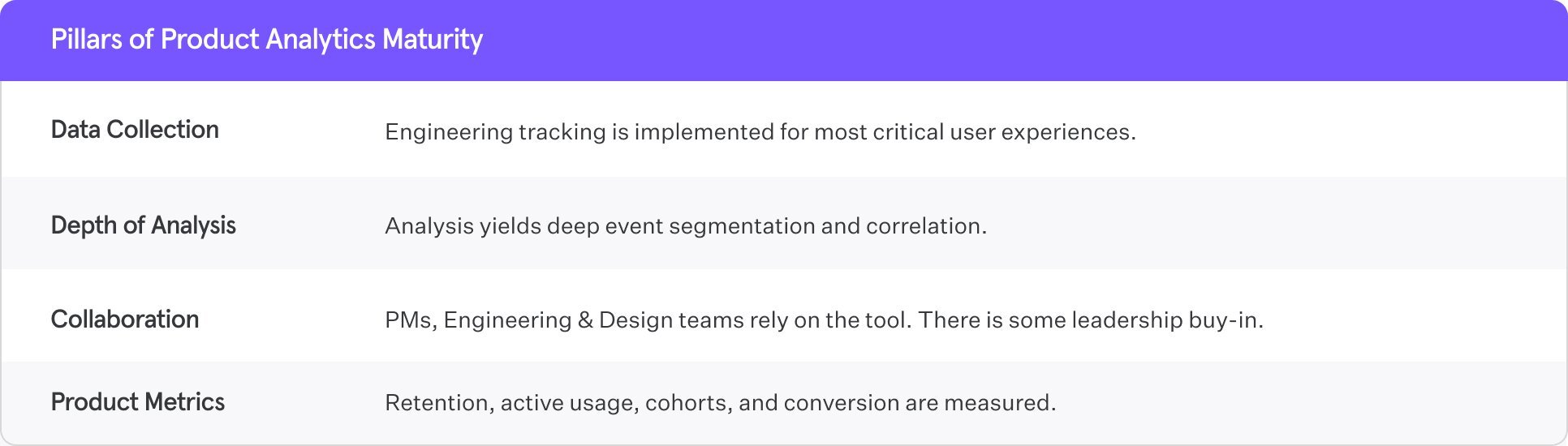
Common markers of Advanced stage
In this stage, businesses use multiple user journey solutions. These include attribution, engagement, and experimentation tools that are mostly integrated, requiring very few manual workflows. The automation means you can more easily pull product analytics into your decision workflow. At the same time, because most user experiences are tracked, you have access to a much deeper dataset. Careful planning is critical at this stage in order to leverage the data instead of getting overwhelmed by it.Explore MixpanelSee how product and growth teams use Mixpanel’s powerful reports to answer any question.Try It With Sample Data
Example of Advanced product analytics maturity
Questions you can answer
In the Advanced stage, you can assess what’s happening to your product and identify factors contributing to these patterns:- What combination of user attributes (like device or region) lead to the highest product retention rates?
- Who are my power users and how does their usage differ from that of casual users?
- What sequences of actions lead my users to upgrade their membership?
- Which in-product actions correlate most strongly with high retention, a plan upgrade, or any other goal?
- How do engagement and retention vary by company or account?