

Stage 02
In this section:- Introduction to Intermediate product analytics maturity
- Common markers of Intermediate stage
- Example of Intermediate product analytics maturity
- How to move on from Intermediate
Introduction
In the next stage of product analytics maturity, your metrics and analysis aren’t yet as focused as they could be — but you have more of a sense of what you want to track and are willing to invest in the tools and resources needed to answer questions. At this point, you recognize that product analytics is important, but aren’t quite sure how to prioritize metrics and use them to guide product development. You’ve moved on from “just curling dumbbells” to the bench press — and have added in a mile-long run for good measure.You’re using data to inform product decisions, but not yet to propel them forward in an iterative or systematic way.
“Think about how you can include your product analytics tool in the day-to-day and week-to-week operating of your business. It will make your team’s analytics and experimentation muscles that much stronger.”
Vince Maniago
VP of Product Management, EmpowerExplore MixpanelSee how product and growth teams use Mixpanel’s powerful reports to answer any question.Try It With Sample Data
Common markers of Intermediate stage
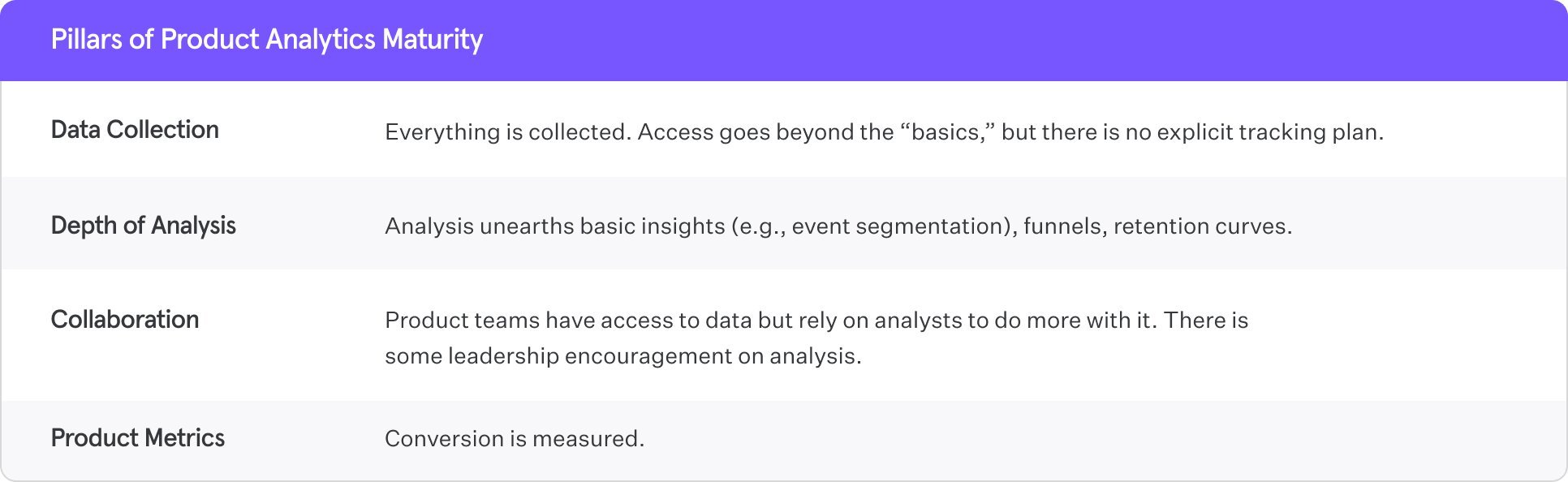
In this stage, some businesses will opt for codeless product analytics tools in addition to Business Intelligence (BI). This means they begin tracking all events up front, leaving the act of determining their product analytics strategy for later. The resulting implementations are easier at first, with minimal effort needed from developers resources. However, codeless implementations can lead to serious issues down the line— missing or inaccurate data, broken tracking, exporting difficulties, and heightened security risks. A codeless solution will also limit your depth of analysis by not capturing all the metadata associated with your events. You’ll soon reach a limit on the insights you can uncover.Example of Intermediate product analytics maturity
Questions you can answer
In this stage, you can assess what’s happening to your product:- How many daily/weekly/monthly active users does my product have?
- What is the average retention rate of all my users?
- Where in my funnel do users drop off?
- What are the most common user journeys?